Foil stamped and debossed business cards: what each one does and how to choose
Ideas & tips · Business cards
Foil stamped and debossed business cards: what each one does and how to choose
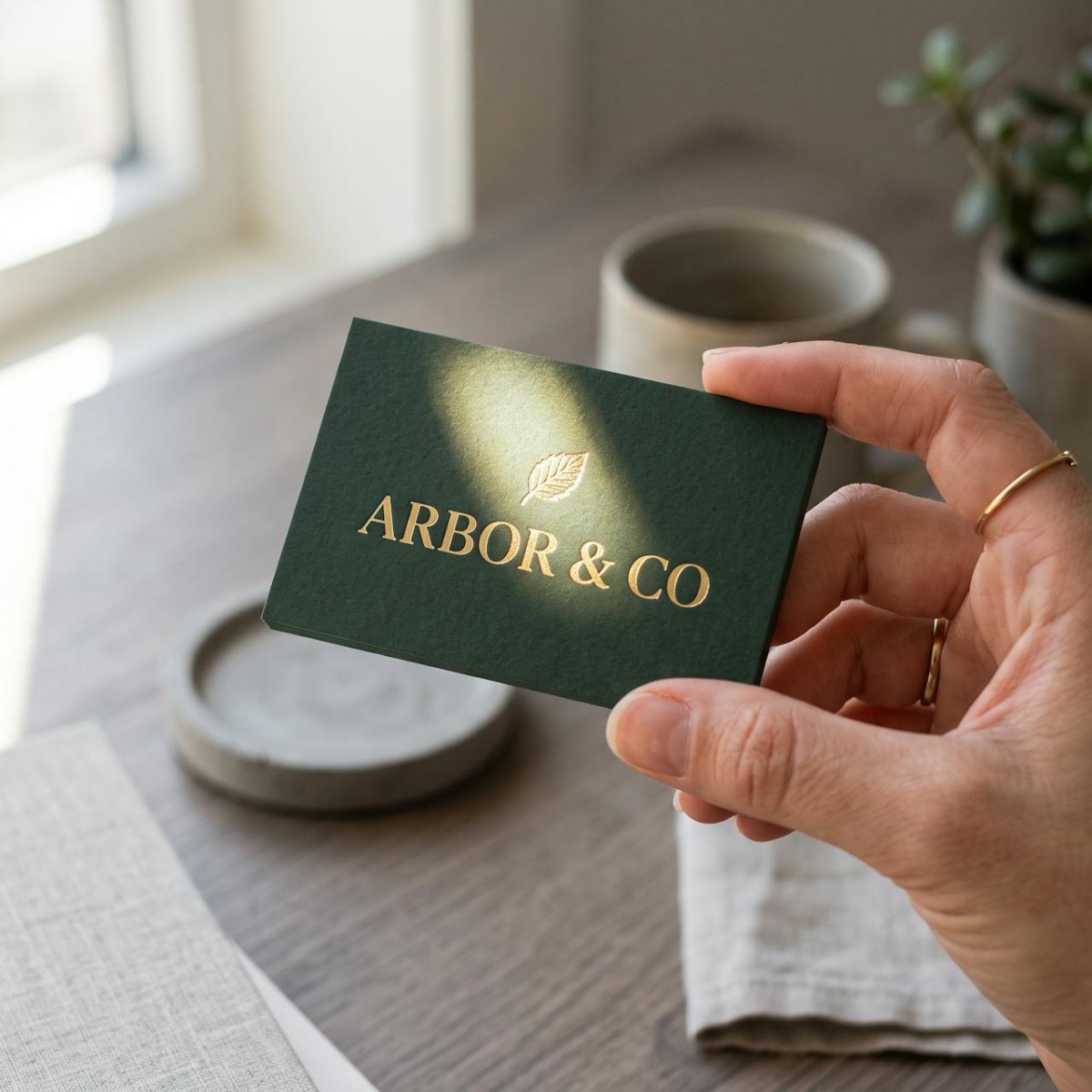
Foil stamping adds a shiny surface to a business card; debossing presses the logo into the board without ink. Both are made with a metal die, one card at a time, and both can be felt with a fingertip.
Here you will find what each technique does, which papers and laminates it works with, and when standard printing is enough.
Where these techniques come from
For centuries, gold was applied to book covers by hand, with thin gold leaf and heated brass tools. In the 19th century hot stamping became standard practice in bookbinding, and in 1892 the German Ernst Oeser took out the first patent for it. Later, foil on a roll replaced gold leaf and the technique spread to packaging, diplomas and cards.
The business card grew out of the visiting card. By the 1760s, upper-class people in France and Italy left a printed card when they paid a call. The grander ones had engraved ornaments, raised lettering and coats of arms; in 19th-century Britain, by contrast, the custom was a plain card with only the owner’s name.
Both traditions are still with us: the gleam of gold and the restraint of relief.
Foil stamping
A shine that ink can’t give
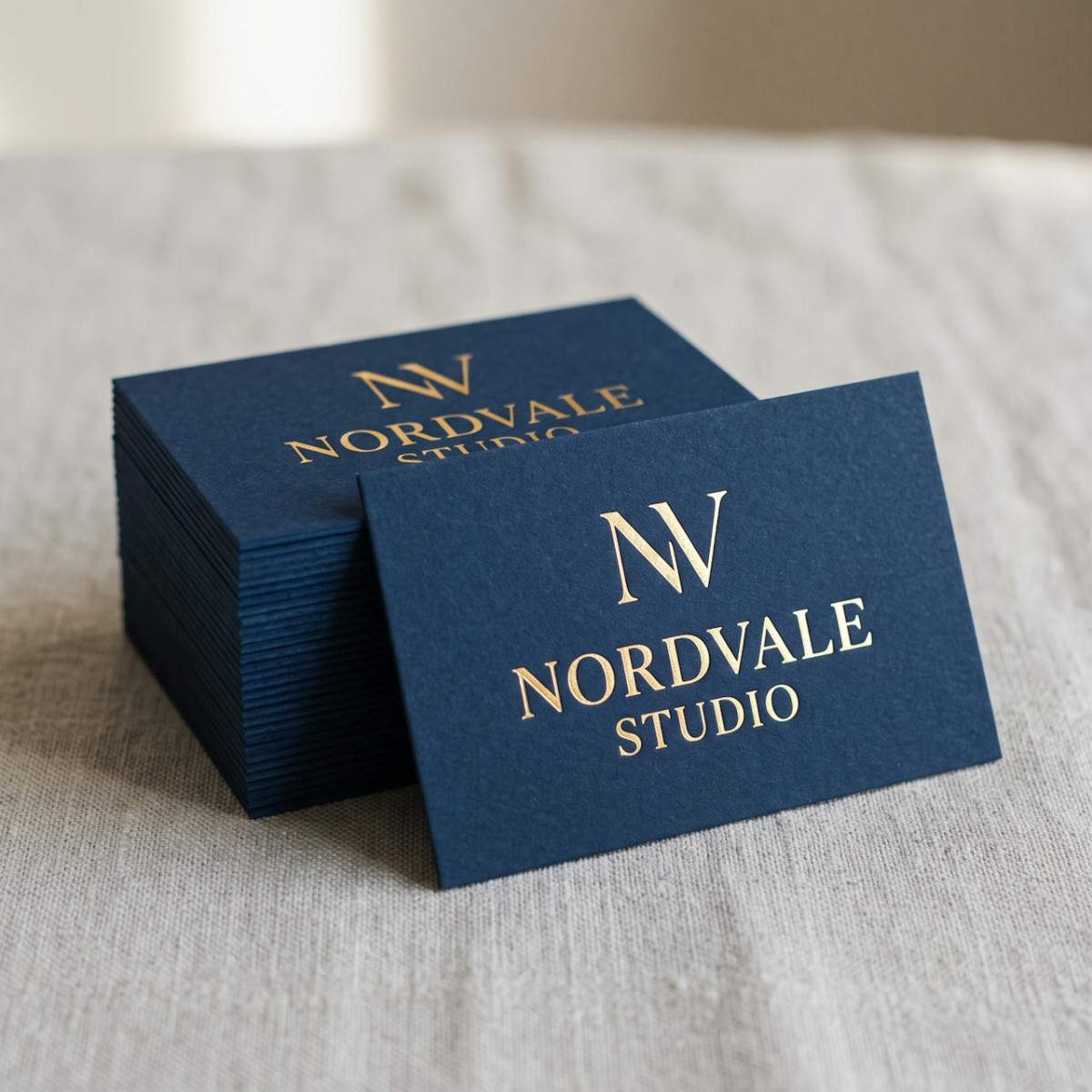
The foil is pressed onto the card with a heated metal die, one card at a time. The surface stays shiny and sits slightly sunk into the paper. Gold and silver foil reflect light like metal; printed “gold” looks brownish yellow beside them.
Each card has foil in one colour, either on the front only or on both sides. It works best on small areas: a logo, a monogram, a name or a fine line.
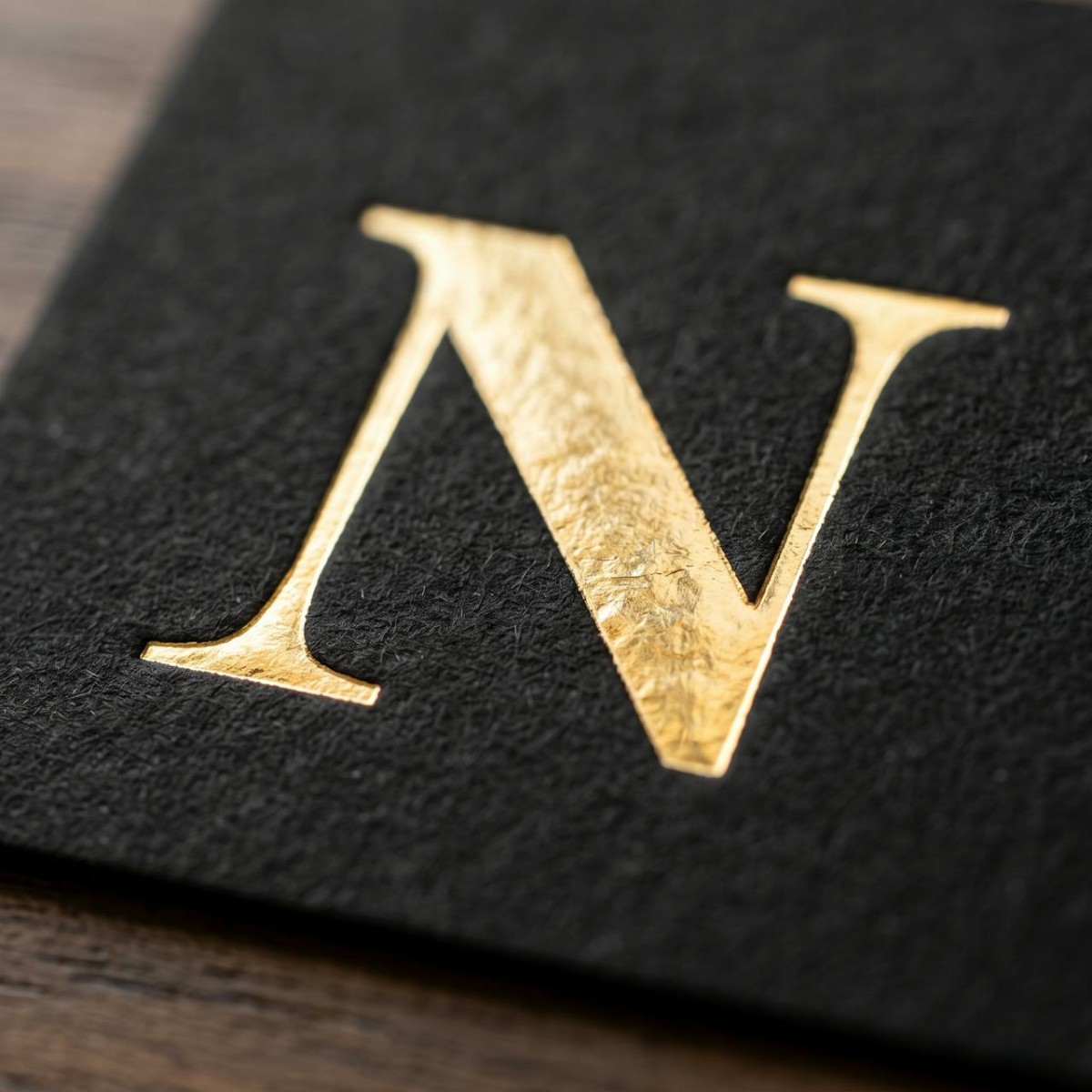
There are four colours to choose from, and each leaves its own impression.
Gold
The classic. Warm and festive, associated with tradition and value.Silver
Cooler and more contemporary. Gives a precise, technical impression.Black
A deep glossy surface without a metallic sheen. Confident and minimalist.White
A clean glossy surface. On coloured paper it gives strong contrast; on white paper a subtle shine that shows when the card catches the light.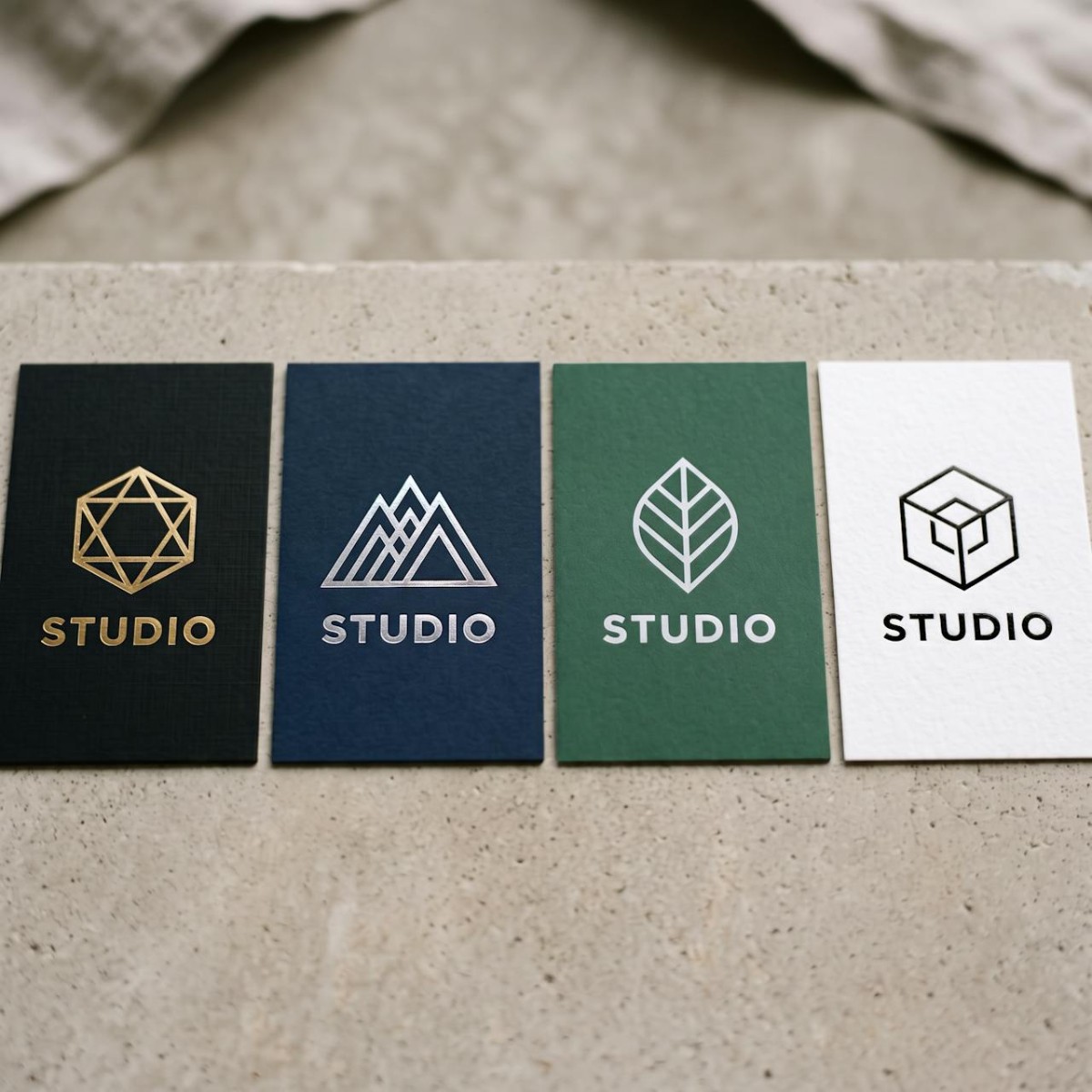
Black and white foil are newer trends. They don’t shine like metal the way gold and silver do; they leave a smooth glossy surface that stands out against matt paper.
Debossing
An image without ink
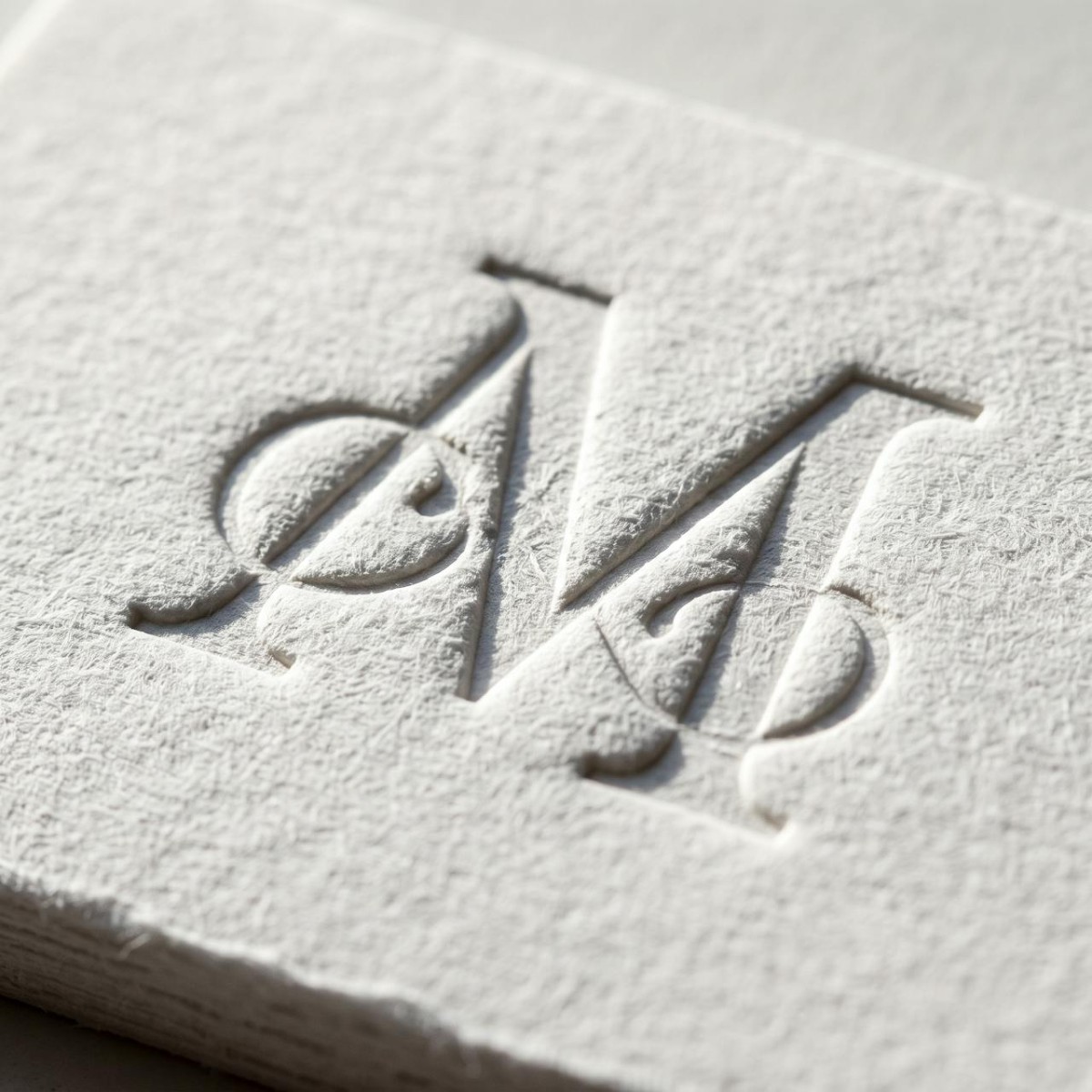
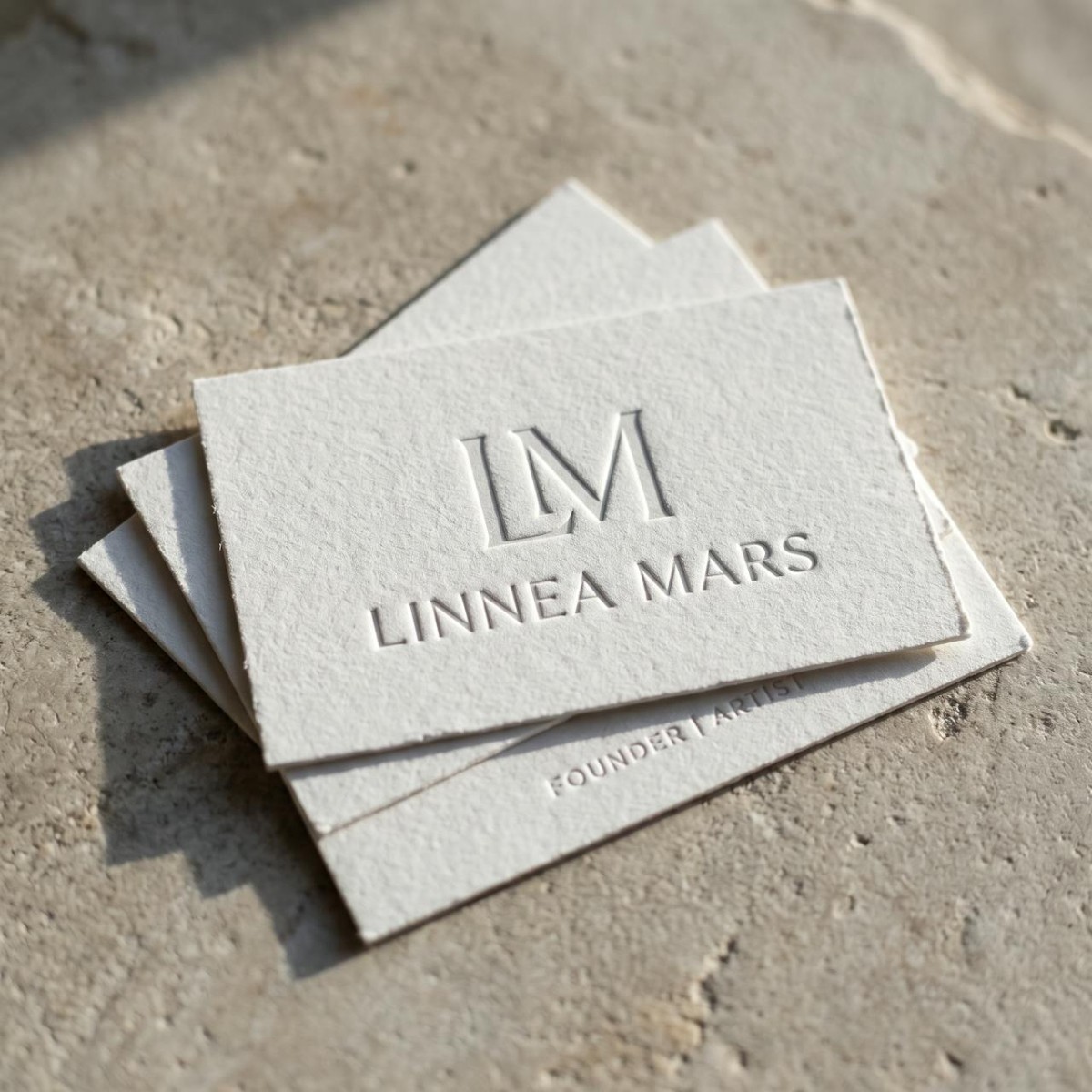
Debossing gives the card an extra dimension. The die presses the logo or text about 0.3 mm into the paper, without ink, and light and shadow bring out the image. People want to hold a card like this and feel its texture with their fingers.
Debossing goes on the front and shows as a relief on the back, so place any text on the back away from it. The paper decides how deep the impression is: thick uncoated matt board 340 g and black 380 g give the clearest result; on coated silk board it stays softer.
Suits a logo, a monogram or a single line of text. Fine lettering and large solid areas don’t come out in debossing.
Paper decides half the result
Both techniques are available on seven papers.
White
Uncoated matt board 340 g and coated silk board 300 g. The design is printed in full colour on both sides, with foil or debossing added on top.Dyed through
Blue 300 g, green 320 g, light brown 300 g, dark red 300 g and black 380 g. These are printed in white or in a gloss matching the paper tone, which looks like spot varnish.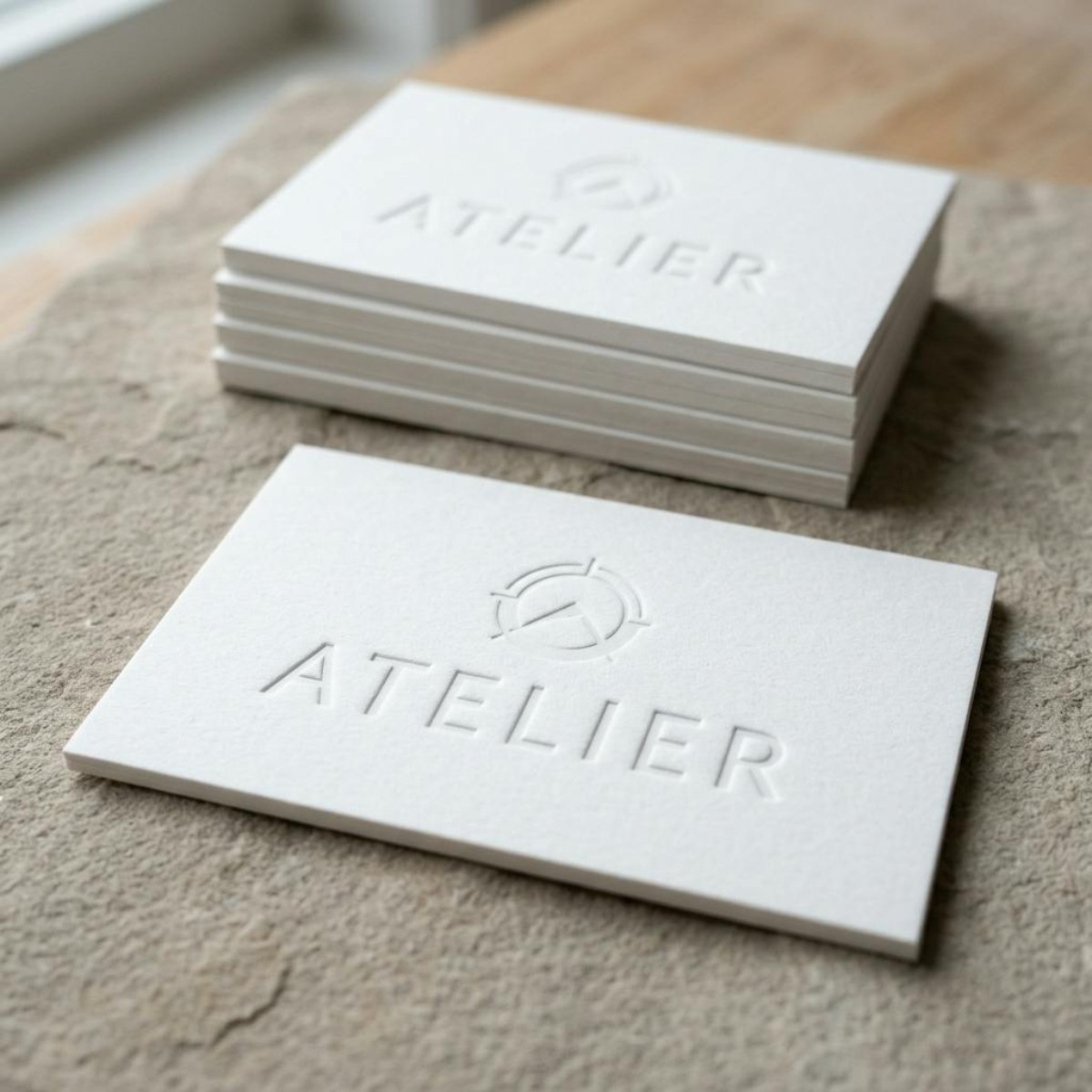
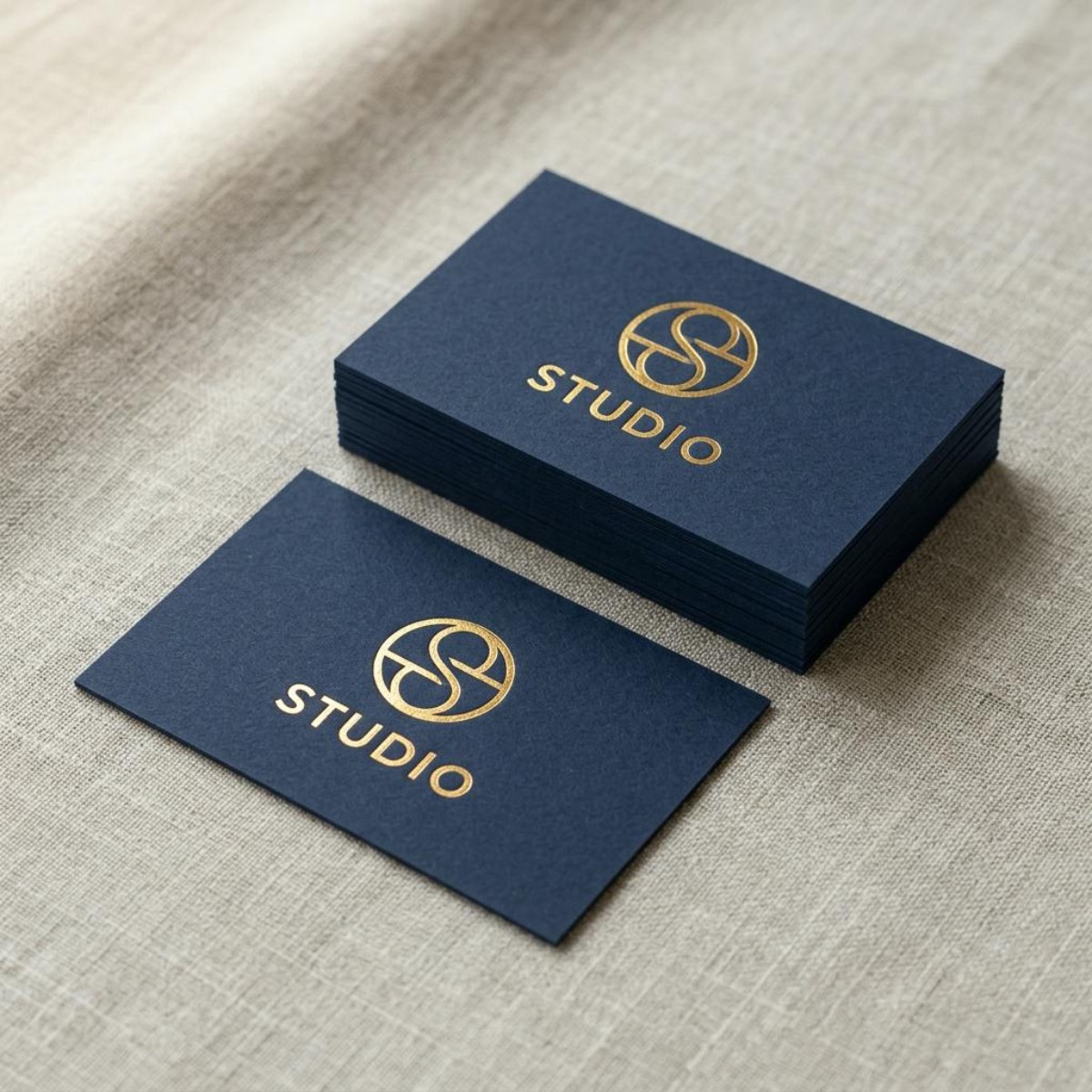
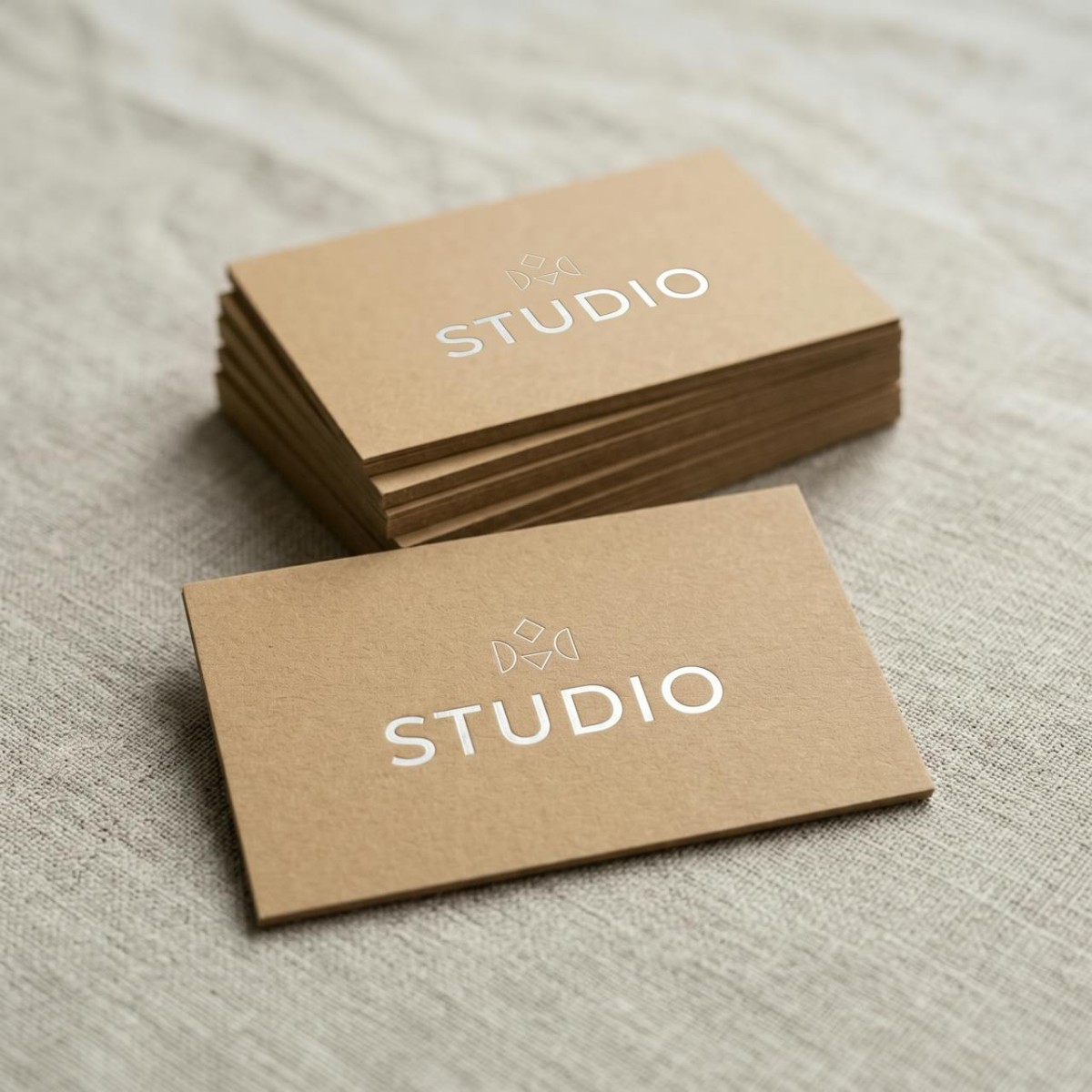
Traditionally, foil stamping and debossing are done on white paper. Coloured board adds an effect of its own, but keep in mind that the same design looks different on dark blue or black than on white: the colour of the paper shows through the ink.
Why laminate
Laminate is a thin film over the printed card. You can choose matt, gloss or soft touch laminate, always on both sides. Laminate does four things.
Protects the print
A business card lives in pockets, wallets and card holders. Without laminate, dark solid areas wear at the edges and pick up fingerprints.Keeps edges clean
Paper stretches when it is debossed, and under the film the printed layer doesn’t crack.Changes the surface
Matt laminate takes away the shine and leaves a calm surface, gloss brings out colour and contrast, soft touch is matt and velvety. Next to a matt surface, shiny foil stands out more.Adds stiffness
The card doesn’t bend or crease as easily.Laminate also covers the surface of the paper itself. If you chose uncoated board for its texture, leave the card unlaminated.
What a card like this says about your company
A business card is one of the few things a client actually receives from your company. Before they read the name, their fingers register the card’s weight, surface and edge.
Foil and debossing add something to that moment that a screen can’t: a shine that moves as the card turns, or an impression your thumb finds.
Foil
People know foil from diplomas, book spines, wine labels and chocolate boxes. On a card it signals occasion and value. It is chosen by restaurants, beauty salons, jewellers, hotels, estate agents and event organisers.Debossing
Debossing speaks more quietly. A logo without ink asks the recipient to look closer and suggests a company that doesn’t need to compete for attention. It is preferred by architects, lawyers, consultants, designers and craft makers.Either way, it also counts that the technique is slower and more expensive than printing. The recipient senses this even without being able to name the technique.
Which to choose
| Foil stamping | Debossing | |
|---|---|---|
| What it leaves on the card | A shiny metallic or coloured surface | An inkless impression, about 0.3 mm |
| Colours | Gold, silver, black and white | The paper’s own tone |
| Position | Front, or both sides | Front |
| Paper | Traditionally white; coloured adds an effect | Thicker paper gives a deeper impression |
| Impression | Festive, visible from a distance | Restrained, visible up close |
If you need more than 500 cards or need them quickly, choose standard business cards: they cost about half as much and are ready in 3 working days.
Before you order
See the price in the calculator straight away
If you need help with the design or the print files, or want an offer for another size or quantity, send us an inquiry.